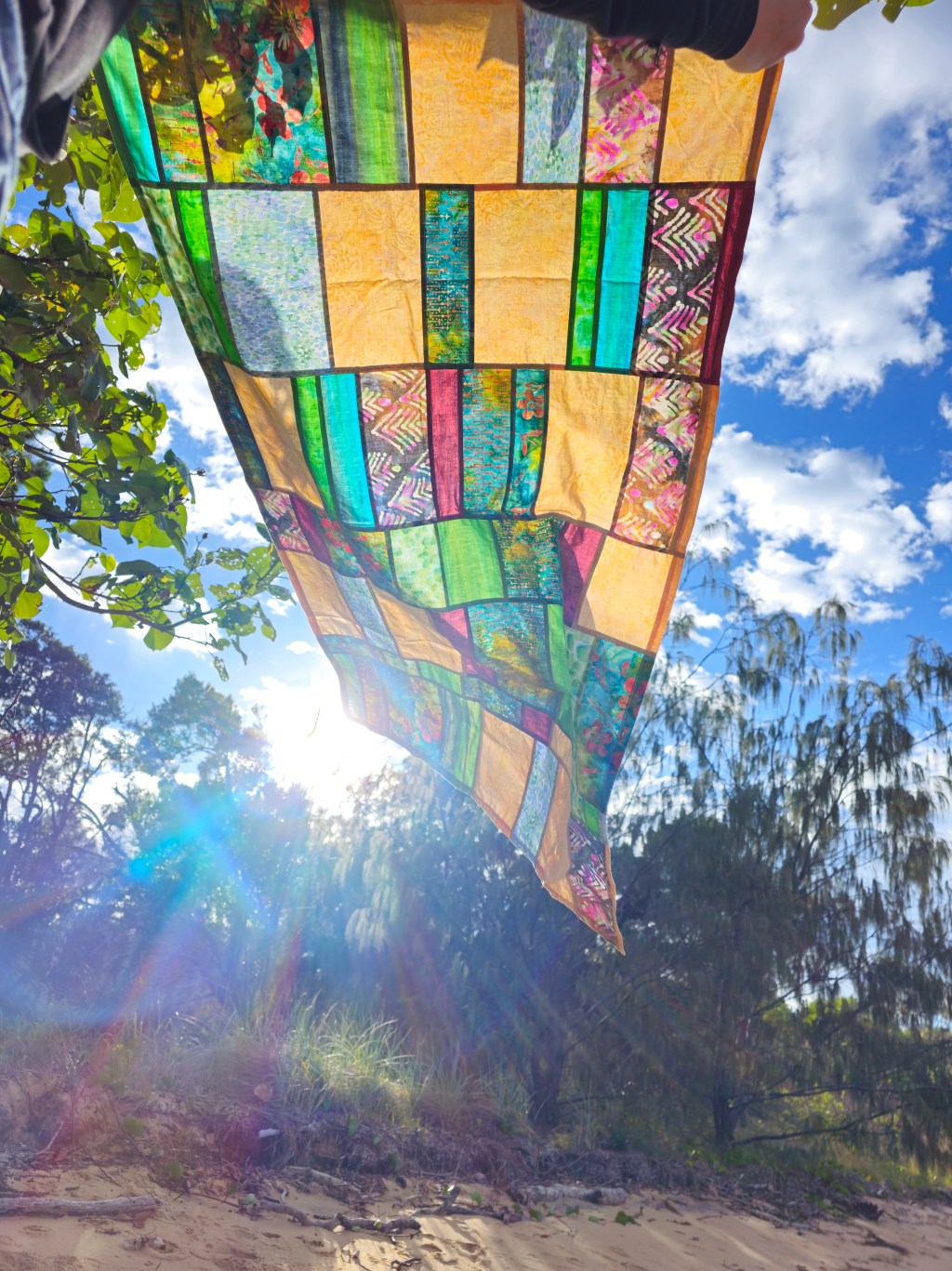
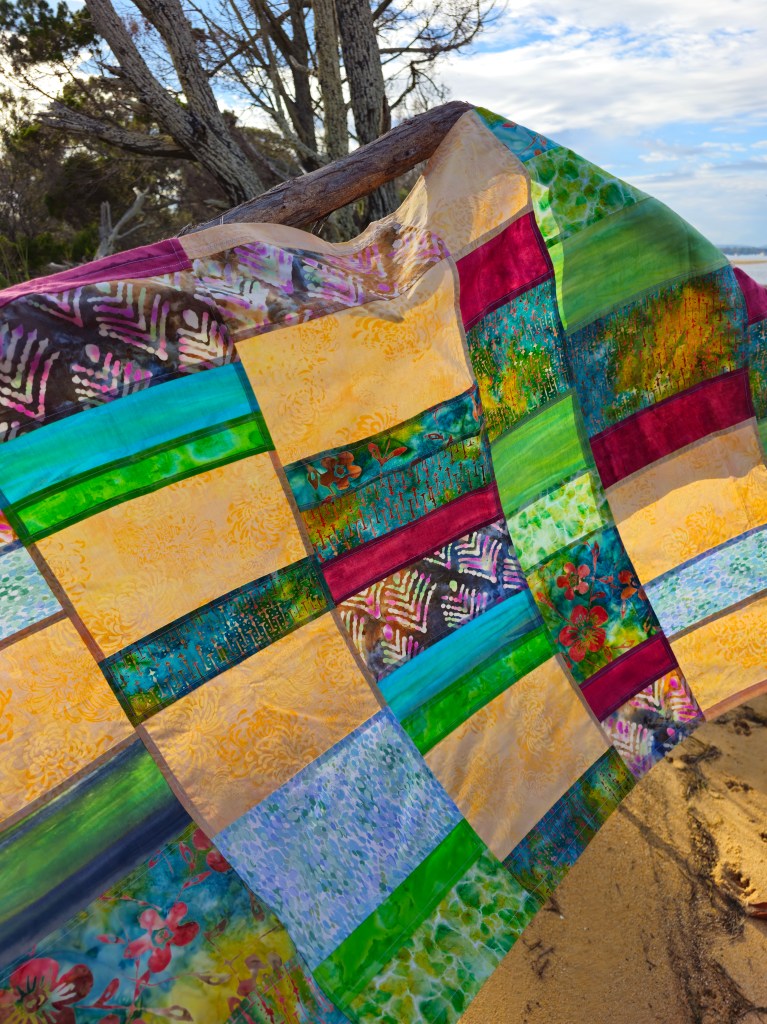
This week Betty Lorna Vintage is showcasing Pojagi quilting. A traditional form of Korean textile art characterised by its use of patchwork techniques which create both decorative and functional forms of artwork.
The History of Pojagi Quilting
Popularised in pre-modern Korea during the Chosŏn dynasty (1392-1910), Pojagi emerged as a cultural icon. This form of textile art allowed women during this period to direct their creative energy and daily struggles towards the socially acceptable activities of sewing and embroidery. Originally used for wrapping and transporting items, these patchwork pieces were often created from leftover scraps, highlighting the resourcefulness and practicality of the time.
The art of Pojagi in many ways reflects Korea’s cultural values, emphasising beauty in simplicity and functionality. In this regard, Pojagi cloths served multiple purposes beyond daily use; they functioned as tablecloths, conveyed marriage proposals, transported belongings on journeys, and safeguarded sacred texts. Today, the art form lives on, and continues to inspire contemporary artists to create beautiful pieces of art.
Reflections on Pojagi Quilting
One of the joys of Pojagi quilting lies in the spontaneity of design. With no pattern, creative expression takes over allowing you to slow down and experiment with the design and the flow of fabric.
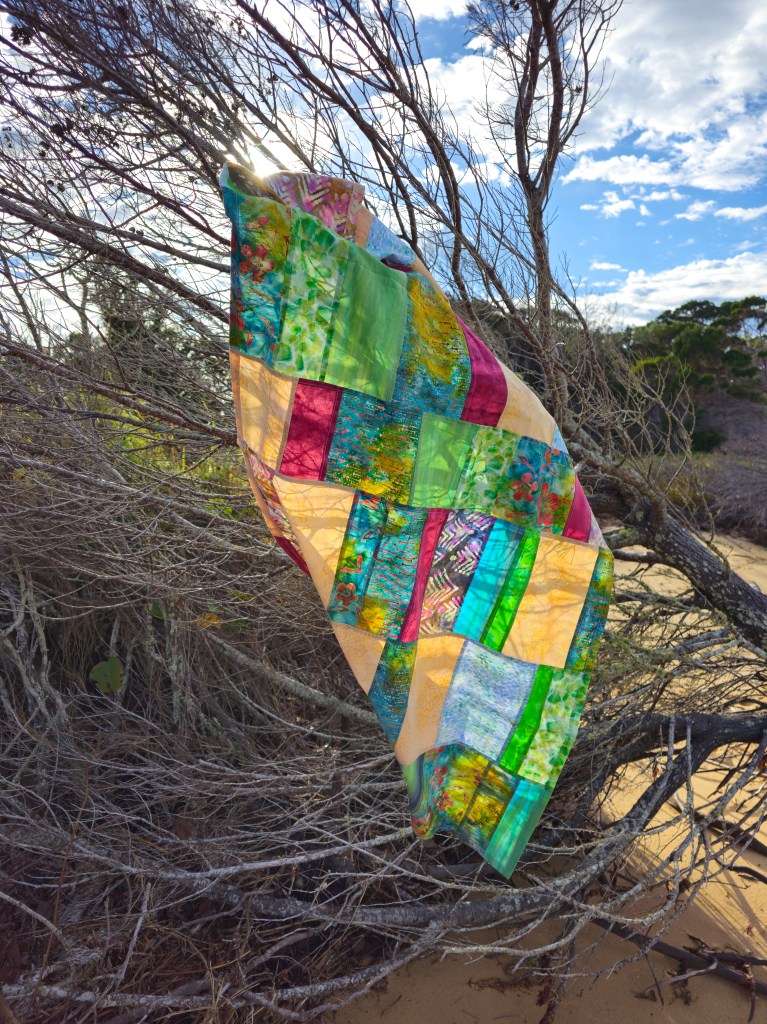
Entitled: Sea Glass
Pojagi quilting also focuses on the beauty of seams and its finishes, with the final project being a reversible single layer of fabric with no exposed seams. The meticulous attention to detail required in stitching fosters a sense of accomplishment and pride.
One of the best projects that highlights the beauty of this art form is window hangings. When illuminated by natural light, panels look like pieces of stained glass.
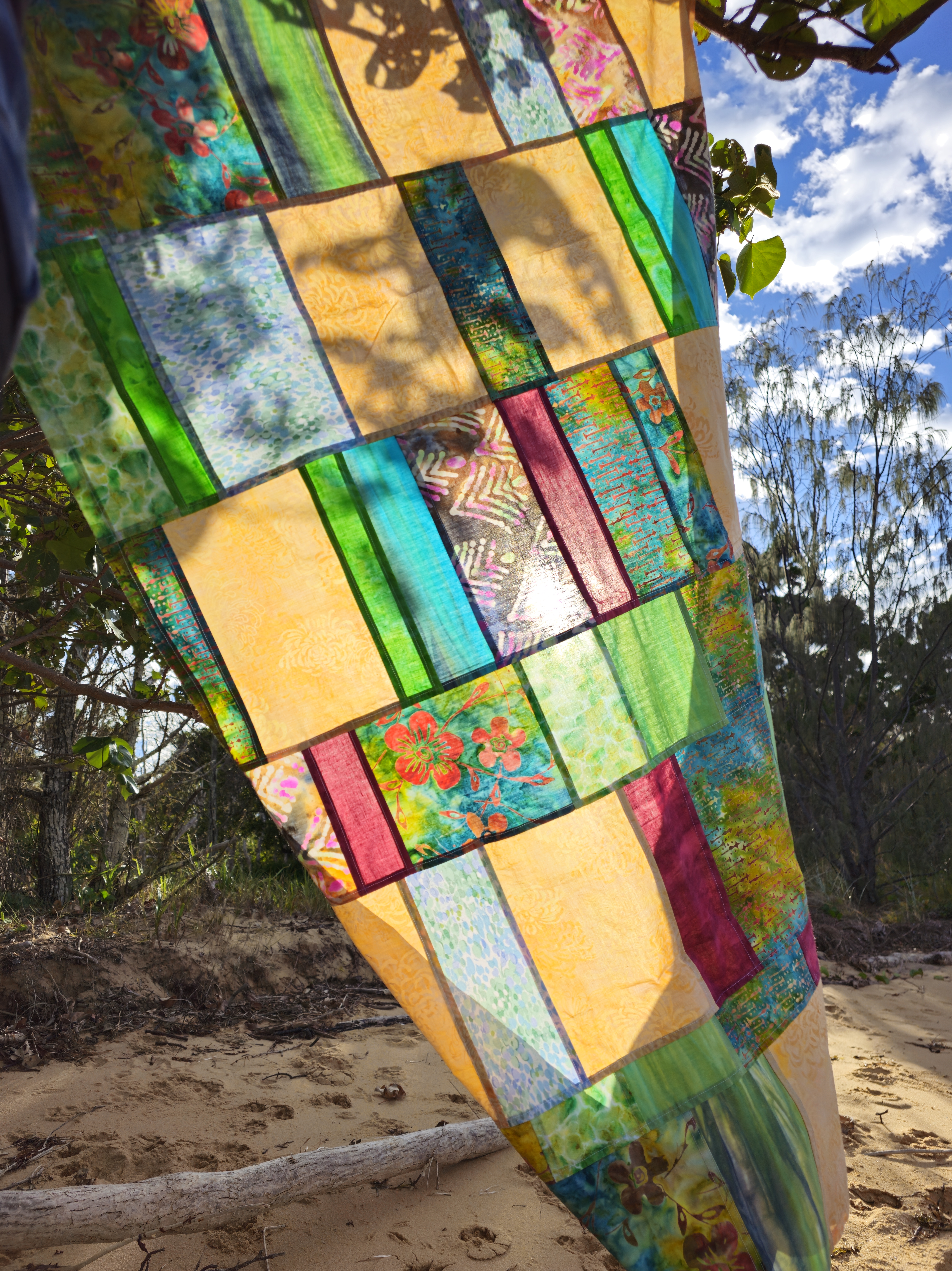
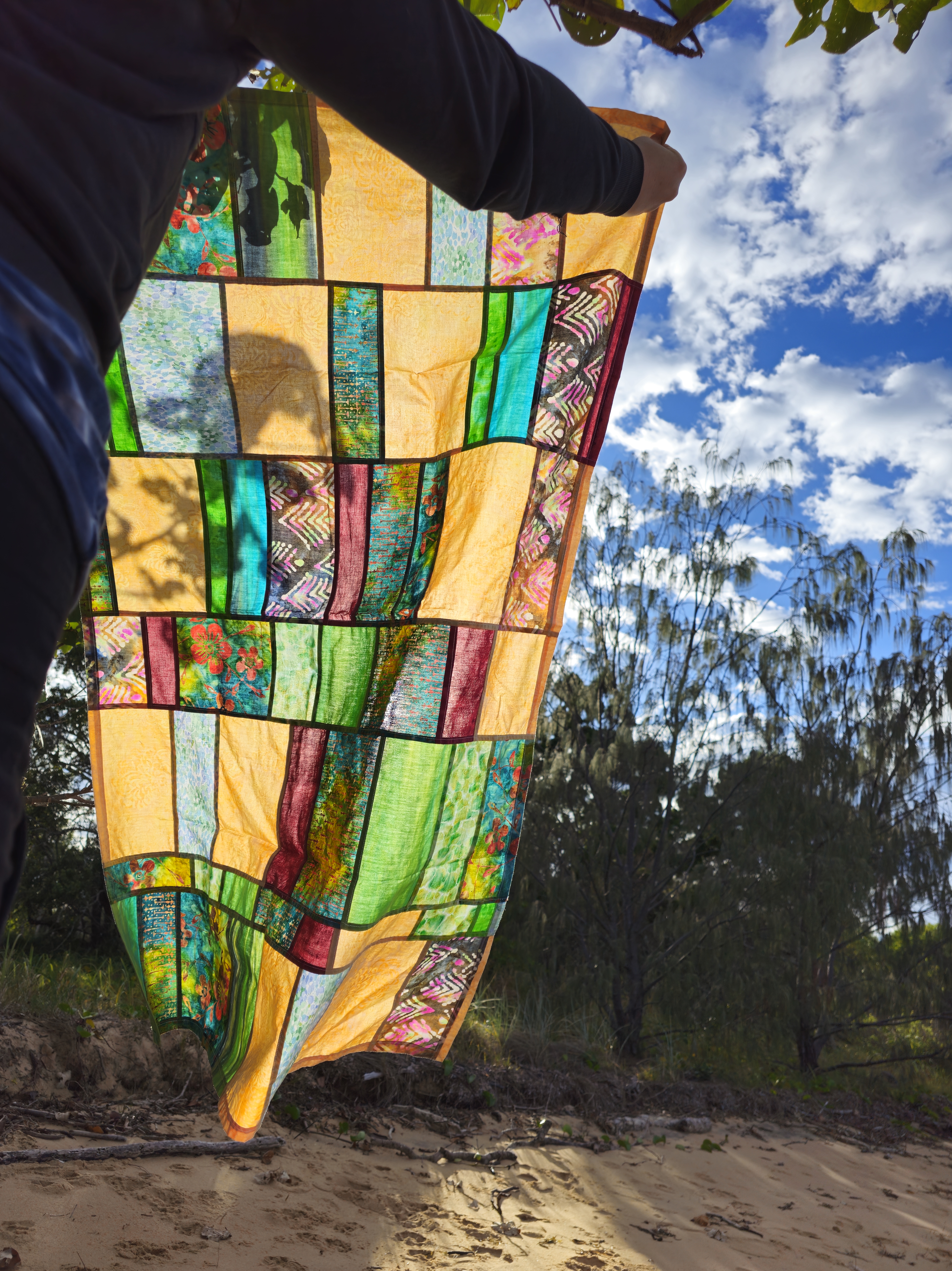
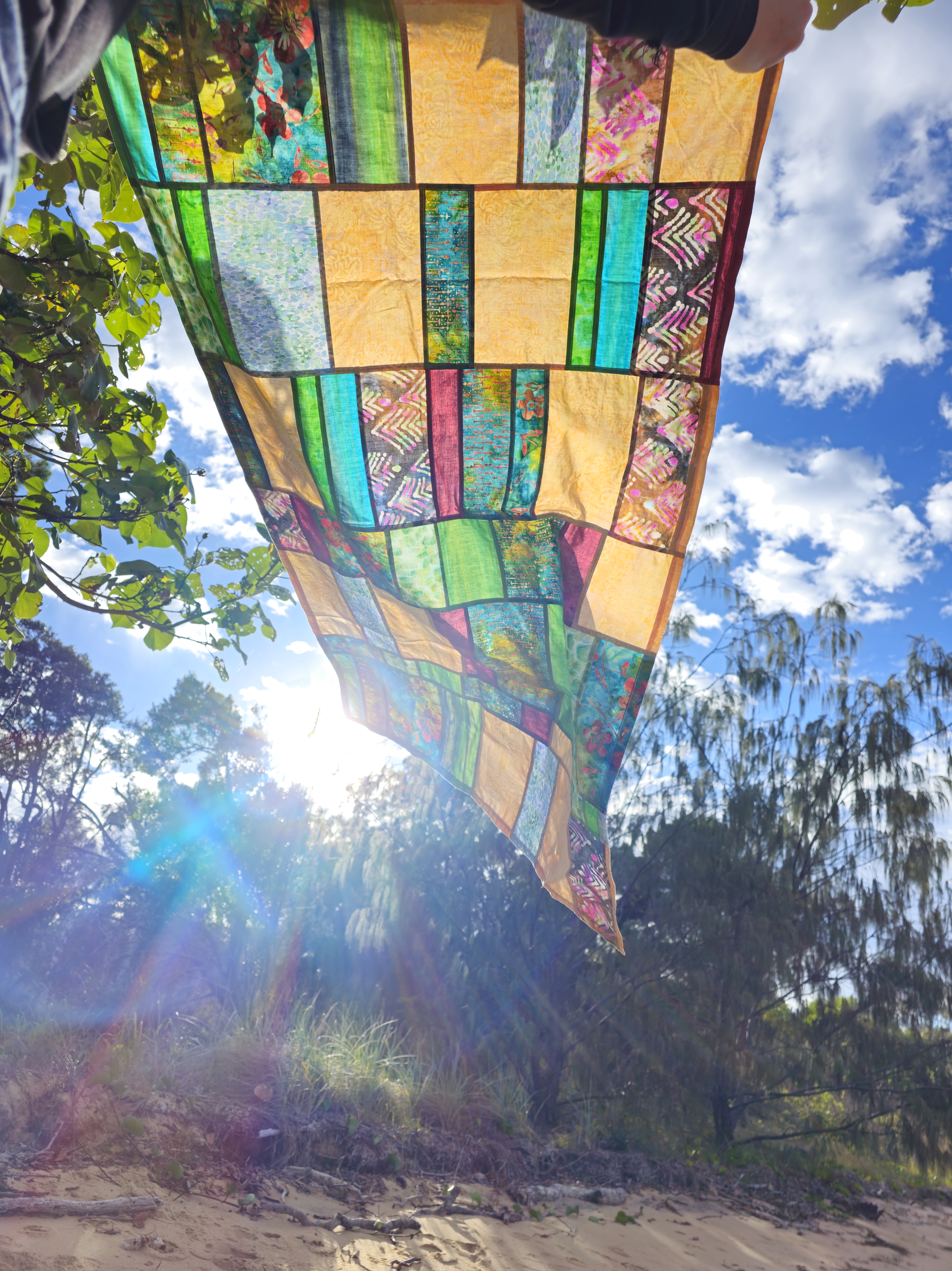
Light passing through each block reveals the outlines of the seams and the diffused colours of the fabric within each block. Inspired by sea glass, a variety of hand-dyed floral batik fabric were used to create this project. With colours ranging from vibrant blues and greens, to deep purples and luminescent gold tones. Like sea glass, each panel captivates the beauty of nature.
Hopefully, I have done this quilting style justice, and managed to capture the creativity and resourcefulness of those who lived during this period. So that we can continue to appreciate the beauty of handmade items that embody heritage and uniqueness.
Well, I think that’s it from me. Thanks for stopping by! I hope you enjoyed this article about Pojagi quilting, and continue to stay tuned for more quilting fun.
Georgia (Owner of Betty Lorna Vintage)
And a friendly reminder that here at Betty Lorna Vintage, we have a passion for quilting, and we aim to provide customers with lovingly handmade and unique quilted blankets. In addition to our already available quilts, we also provide a custom quilt service where we can collaborate to create your own custom quilt.
The best way to contact me is through email for all sewing, quilting and business enquires: bettylornavintage@gmail.com
 Betty Lorna Vintage
Leave a comment